The Challenge
Local delivery businesses were running on spreadsheets, mistyped addresses, and WhatsApp threads. The result: lost packages, wasted hours on inefficient routes, and financial chaos at end of day. Nobody knew exactly how much had been collected.
Our Solution
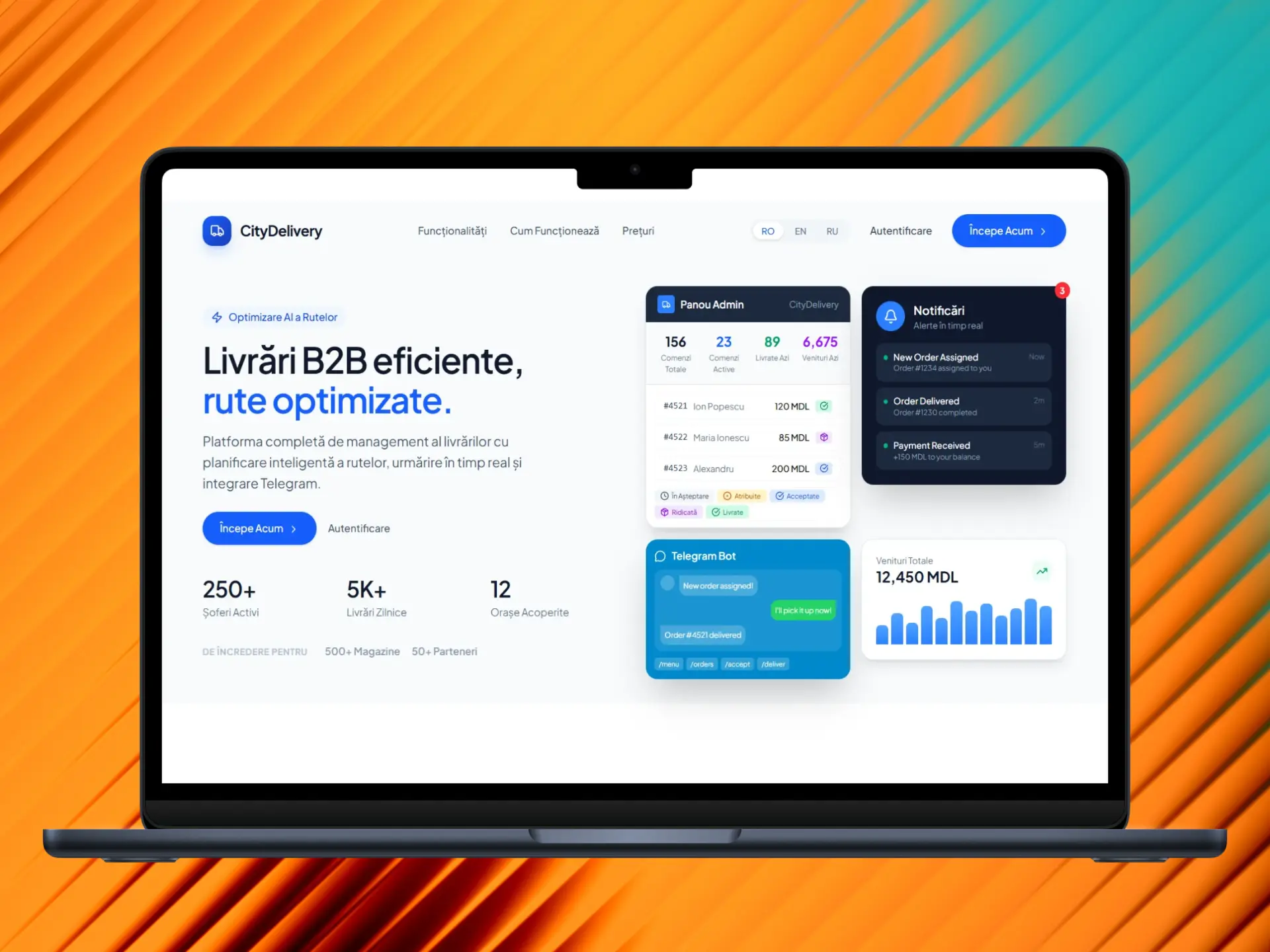
We built a full ecosystem serving three user types: stores, dispatchers, and drivers. Addresses are automatically validated through geocoding (Mapbox), eliminating typos entirely. Dispatchers assign orders in a single click; drivers receive everything through Telegram — no app to install, no password to remember. The system calculates the optimal route and logically groups pickups and deliveries. At day's end, a financial dashboard shows exactly what was collected, how many deliveries were completed, and what each driver is owed.
In numbers
user types, one ecosystem
packages lost after validation
click to dispatch an order
Before / After
| Before | After |
|---|---|
| Addresses typed by hand in spreadsheets and chats | Addresses validated automatically through geocoding |
| Drivers juggling multiple apps and passwords | Everything arrives in Telegram, ready to use |
| Routes planned on intuition | The system calculates the optimal route and groups stops |
| End-of-day income unknown | A financial dashboard shows every collection in real time |
How we built it
Mapping the workflow
We followed an order from phone call to cash and noted every failure point along the way.
One ecosystem, three roles
Separate tools for stores, dispatchers and drivers became one system with a clear role for each.
Automation where it hurts
Geocoding, route calculation and Telegram delivery removed the manual work at its source.
Launch and financial clarity
The day now ends with a dashboard, with guesswork left in the past.